

The most useful AI news over the last day was not a single theatrical model launch. It was a cluster of smaller developer releases pointing in the same direction: AI systems are being asked to show their work, run inside more structured tools, and leave evidence that a human or business can inspect later.
That may sound less exciting than a new leaderboard result. It is probably more important. When AI moves from answering questions to touching code, browsers, cloud infrastructure, customer conversations, or internal workflows, the buyer’s question changes. It is no longer only “is the model smart?” It becomes “can I see what happened, replay it, limit it, and trust the handoff?”
The big signal
The big signal is that agent tooling is becoming more operational. The interesting work is moving into traces, sessions, browser recordings, code intelligence, sandbox behaviour, deployment metadata, and safer interfaces between AI and the real systems it uses.
Microsoft’s Playwright MCP v0.0.76 release is a good example. The release added tools to show or hide action annotations on recorded browser videos, improved remote endpoint handling, added a maximum output-size option with disk eviction for oversized responses, and tightened several failure modes. None of that reads like consumer AI fireworks. For builders, it is practical infrastructure: if an agent uses a browser, you want a record of what it clicked, typed, saw, and returned. You also want boring limits around output size, cache paths, remote headers, invalid arguments, and path traversal.
GitHub made the same theme visible from another angle. Its recent Copilot CLI guidance on giving the CLI real code intelligence through language servers and turning one-off prompts into custom-agent workflows is really about reducing guesswork. A terminal agent that understands symbols, references, diagnostics, and repeatable routines is a different product from a chat box pasted next to a shell.
OpenAI’s Agents Python v0.17.5 release was smaller, but still aligned with the same pattern: fixes around sandbox retryability, typed hook results, tracing documentation, memory examples, and test coverage. Small library changes like that matter because production agents fail in small ways: a sandbox error is retryable or it is not; a hook result is well typed or it is not; a session can be persisted clearly or it becomes an invisible state bug.
The next serious AI products will not win only by acting. They will win by making action inspectable.
Open-source watch
The open-source and developer-infrastructure stream had several releases worth watching, especially for teams building agentic products rather than demos.
- Hugging Face Transformers v5.11.0 added DiffusionGemma support. The release notes describe DiffusionGemma as a text-generation approach designed to reduce sequential bottlenecks by denoising blocks of tokens rather than generating strictly one token at a time. The practical signal is not that every builder should switch architectures tomorrow. It is that inference patterns are still changing, and serving economics may improve through model design as much as hardware.
- Transformers v5.11.0 also added DeepSeek-V3.2 support. The same release notes describe DeepSeek-V3.2’s sparse-attention direction for long-context efficiency. For meLink-style systems, long context matters only when it stays usable: site content, policies, conversations, and workflow history all need selective attention, not a giant unstructured paste.
- llama.cpp continues shipping frequent local-AI builds. The llama.cpp release feed showed multiple builds within the last 24 hours. Individual build notes can be narrow, but the larger point is important: the local inference layer is still moving quickly. For privacy-conscious products, local and hybrid deployment options are not a side quest; they are part of the trust story.
- LangGraph CLI kept refining deployment plumbing. The 0.4.28 CLI release includes dependency updates and usage tracking when deploying through the CLI. The detail to watch is not the version number. It is that agent frameworks are becoming deployment products, with operational metadata and repeatable environments rather than only notebooks and diagrams.
- AWS is leaning into agent-assisted infrastructure work. AWS published posts on Neuron Agentic Development for Trainium kernel optimisation and an equipment repair assistant using Bedrock AgentCore. The common thread is AI being applied to operational tasks with tools, constraints, and domain context, not simply chat.
Why this matters for meLink
For meLink, this is a useful reminder that agentic AI is not just about giving a model more autonomy. It is about designing the layer around the model so that people can understand and trust what happened.
For meLink web, a website assistant should be able to explain where an answer came from, which page or approved knowledge item supported it, what it collected from the visitor, and why it escalated or handed over. If the assistant qualifies a lead, the business should not receive a mysterious summary. It should receive a short trail: visitor intent, key facts, unanswered questions, and the recommended next step.
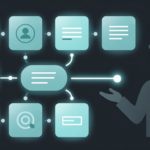
For meLink avo, the lesson is even clearer. Visual orchestration is valuable when it turns invisible agent behaviour into a map: which model ran, which tool was called, what data crossed a boundary, what failed, what retried, and where human approval is needed. A browser recording with action annotations is a simple but powerful metaphor for the whole category. If an AI system acts, the team should be able to replay the important parts.
For meLink prompts, the move from prompts to workflows means experiments should not end at “this answer looked good”. A useful prompt pattern includes constraints, examples, evaluation notes, version history, and the surrounding tool rules. That is how a prompt becomes an asset rather than a lucky paragraph.
And for meLink life, the future personal coordinator, proof will matter because personal AI will touch sensitive context: calendar, messages, tasks, preferences, family admin, and private decisions. Privacy-respecting AI is not only about where the model runs. It is also about giving the person a clear view of what the system did on their behalf.
What builders should take from this
If you are building AI products now, add the evidence layer early. It is much harder to bolt on after users already depend on the workflow.
- Log the decisions, not just the outputs. Capture the prompt version, model, tools, source documents, user context, and important intermediate steps.
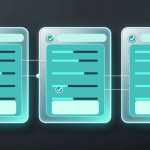
- Make risky actions replayable. For browser and desktop agents, recordings, screenshots, or annotated event trails can turn a black box into something support teams can debug.
- Treat local AI as a product option. Open-weight and local-serving improvements give builders more ways to balance privacy, latency, cost, and resilience.
- Separate autonomy from authority. An agent may be capable of doing a task, but the product still needs rules about when it may act, when it must ask, and when it should stop.
- Design for failures people can understand. Clear retryability, typed hooks, bounded outputs, and specific error messages are not polish. They are part of trust.
The practical takeaway
The AI market is still chasing smarter models, and it should. But the products people keep using will also be the ones that make AI behaviour legible. Investors should watch for companies building the boring trust infrastructure around agents: observability, permissions, replay, deployment discipline, local/cloud routing, and human review.
Small businesses should ask a simple question before adopting an AI assistant: if this tool makes a mistake, will I be able to see why? Builders should ask the same question before shipping.
Autonomy gets attention. Evidence gets adoption.
Leave a Reply