
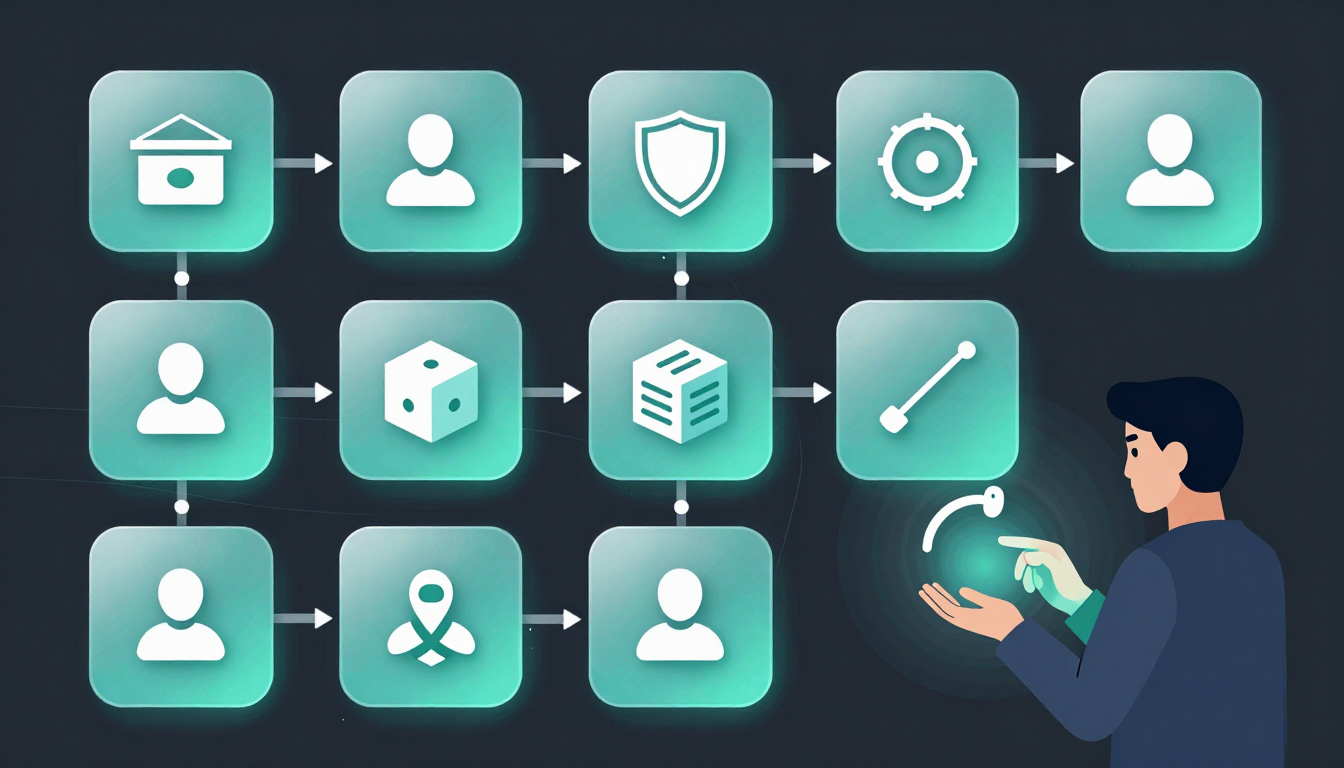
The most useful AI news from the last day was not another leaderboard claim or a dramatic model reveal. It was quieter: OpenAI framed implementation as a partner-network problem, GitHub added more controls around Copilot code review, NVIDIA pushed a benchmark for agentic coding infrastructure, and open-source tooling kept moving at the runtime and evaluation layer.
That combination says something important. The AI market is moving from “who has access to the smartest model?” toward “who can put AI into real workflows without creating chaos?” For founders, investors, builders and small businesses, that is the part worth watching.
The big signal
OpenAI’s latest public update, Introducing the OpenAI Partner Network, is less interesting as a marketing announcement than as a market signal. When a model company starts emphasising partner capacity, training and implementation channels, it is implicitly acknowledging a constraint every business buyer already knows: model access is not the hard part anymore. The hard part is changing the workflow.
That is where many AI projects still stall. A team can buy a subscription, connect an API, or run an open model locally. But someone still has to decide which processes are safe to automate, which data is allowed into the system, which exceptions require a human, what the assistant should do when it is uncertain, and how success will be measured after the novelty wears off.
This is also why the most practical AI products increasingly look less like chat boxes and more like operating layers. They need permissions, memory, handoff rules, analytics, audit trails, human escalation and a clear boundary between suggestion and action. The value is not only in producing fluent text. It is in helping the user complete a job reliably.
GitHub’s new Copilot code review configurations and controls point in the same direction. The changelog highlights organisation runner controls, content exclusion support and expanded custom instructions for repositories. Those are not flashy features, but they are exactly the kind of controls teams need before an agentic tool becomes part of production software work. The more AI touches real systems, the more the product has to answer operational questions: where does it run, what can it see, what rules does it follow, and who is accountable for the output?
NVIDIA’s June 12 technical post on AA-AgentPerf and agentic coding performance adds another layer. It is vendor material and should be read with that caveat, but the benchmark framing is useful: agent workloads are not just single prompts. They involve tool calls, variable sequence lengths, concurrent sessions, non-deterministic paths and latency from the environment around the model. In other words, “agent performance” is a systems problem, not only a model-size problem.
Open-source watch
The open-source and open-weight ecosystem kept reinforcing the same theme: the practical stack around models is getting better, even on days without a giant model launch.
- llama.cpp shipped another daily release. The b9637 release, published on June 14, includes a dedicated Cohere2MoE / North Code parser and the usual spread of prebuilt binaries across macOS, Linux and Windows targets. One small parser change will not transform the market, but the cadence matters. Local inference keeps improving through hundreds of small compatibility and deployment fixes.
- Ollama v0.30.8 focused on reliability and cache behaviour. The release notes mention fixes around provider selection, better KV cache reuse through prompt-caching changes, more stable MLX inference, and improved recurrent-model support. For small teams experimenting with private or local AI, these are the boring improvements that make local systems more usable.
- Hugging Face Transformers v5.12.0 added more multimodal and deployment-relevant model support. The release notes include MiniMax-M3-VL, PP-OCRv6 documentation and tests, and Parakeet RNNT support. That matters because AI products are becoming multimodal by default: text, images, documents, voice and structured data all end up in the same workflow.
- Ai2’s olmo-eval workbench is a useful reminder that evaluation belongs inside the model-development loop. The Hugging Face post on olmo-eval argues for reproducible evaluation while a model is changing, not just after a model is finished. Product teams can take the same lesson: evaluate assistants continuously against the jobs they are supposed to do, not only against generic benchmarks.
- Unsloth’s latest beta expanded practical local experimentation. The v0.1.464-beta release notes support for DiffusionGemma, Gemma 4 MTP, MiniMax-M3, audio chat, a model hub/download manager and experimental chat-with-files features. That is a good snapshot of where builder tooling is heading: local models, multimodal interfaces, RAG, and simpler paths from download to use.
Why this matters for meLink
For meLink, the relevant lesson is not “use every new model.” It is that useful agentic AI needs an implementation layer that feels calm, inspectable and aligned with the user’s real environment.
A website sales assistant such as meLink web cannot simply answer questions creatively. It has to understand the site, route the visitor toward the right next step, know when to escalate, and avoid pretending certainty when the business has not provided an answer. A visual orchestration layer such as meLink avo is not valuable because it makes diagrams pretty. It is valuable if it helps people see what their agents are doing, where data flows, which tools are connected, and where human approval belongs.
The same principle applies to meLink prompts and the longer-term meLink life vision. Prompt and persona experimentation is useful only when it becomes a repeatable way to test behaviour. A personal AI coordinator is useful only if privacy, permissions, memory and handoff are designed from the beginning rather than bolted on after the demo.
This is also the investor angle. The next wave of value may not come only from the companies that announce the most capable base model. It may come from teams that make AI adoptable: easier to govern, easier to deploy, easier to evaluate, and easier to trust in the small messy workflows where businesses actually live.
The practical takeaway
If you are building or buying AI this week, ask a less glamorous question: what has to be true for this assistant to become part of normal operations?
- Can it run where your data rules require it to run?
- Can you see what it did and why?
- Can you test it against your real tasks, not only a demo prompt?
- Can humans take over cleanly when the stakes are high?
- Can the system improve without breaking the workflow around it?
The last 24 hours of AI news did not produce one obvious headline that changes everything. It produced a more useful signal: the winning products are becoming implementation products. Models still matter. But the real work is moving into the layer that connects models to people, permissions, data, decisions and trust.

Leave a Reply