
From the meLink team
Tag: practical AI adoption
-

When Not to Use AI in Your Business
Knowing when not to use AI is a strategic skill. Some tasks need human judgment, relationship trust, or simply a…
-

Build AI Literacy Before You Build an AI Strategy
Most teams draft an AI strategy before anyone can read what an agent produced. AI literacy is the missing prerequisite…
-

Your AI Handoff Is a Product Surface
When an AI assistant escalates to a human, the handoff should be a designed product surface, not a raw transcript…
-

AI Agent Approvals: Who Gets to Say Yes
AI agent approvals keep the binding yes in human hands. The agent qualifies, drafts, and recommends; a named human commits…
-

Your AI Assistant’s Voice Is a Brand Decision
Your AI assistant’s voice is a brand decision, not a model default. Write a one-page voice brief before the assistant…
-

Good AI Gives People a Way to Interrupt It
AI interruption keeps automation useful when priorities change. Give people clear pause points, safe states, and a way to resume…
-
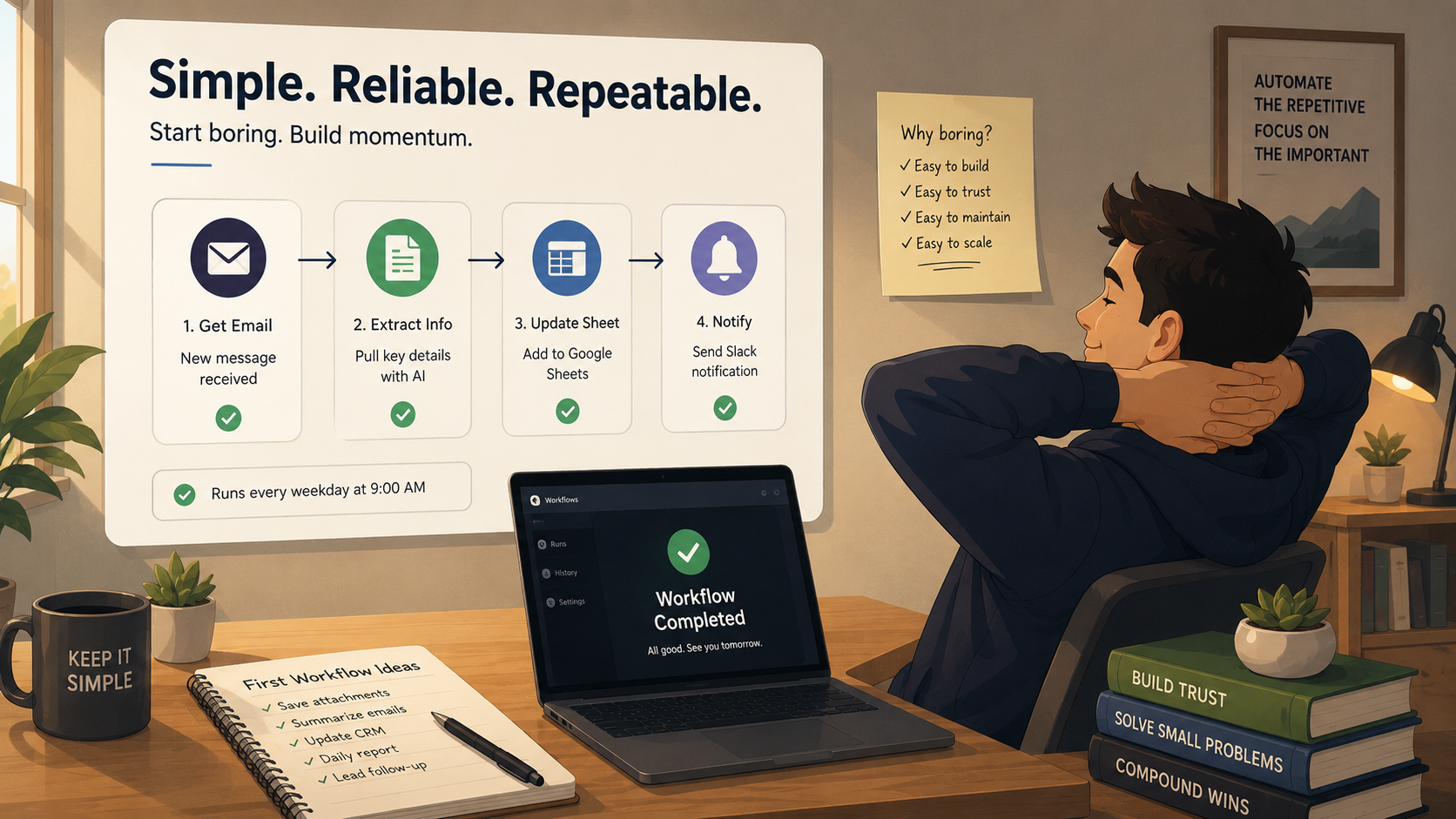
Your First AI Workflow Should Be Boring
A boring AI workflow is the safest first production deployment: frequent, low-stakes, and easy to check. Pick the dull task…
-

The AI Dress Rehearsal: Test Before It Meets a Customer
A dress rehearsal for your AI assistant catches edge cases the demo missed before real customers arrive. Test handoffs, off-topic…
-

Every Customer-Facing AI Needs a Shift Lead
An AI shift lead gives every customer-facing assistant a named operator to protect its lane, read exceptions, and improve service.
-

An AI Task Isn’t Done When It Responds. It’s Done When You Can Check It.
An AI definition of done gives agents a checkable finish line, so small teams get useful outcomes, not plausible-looking activity.