
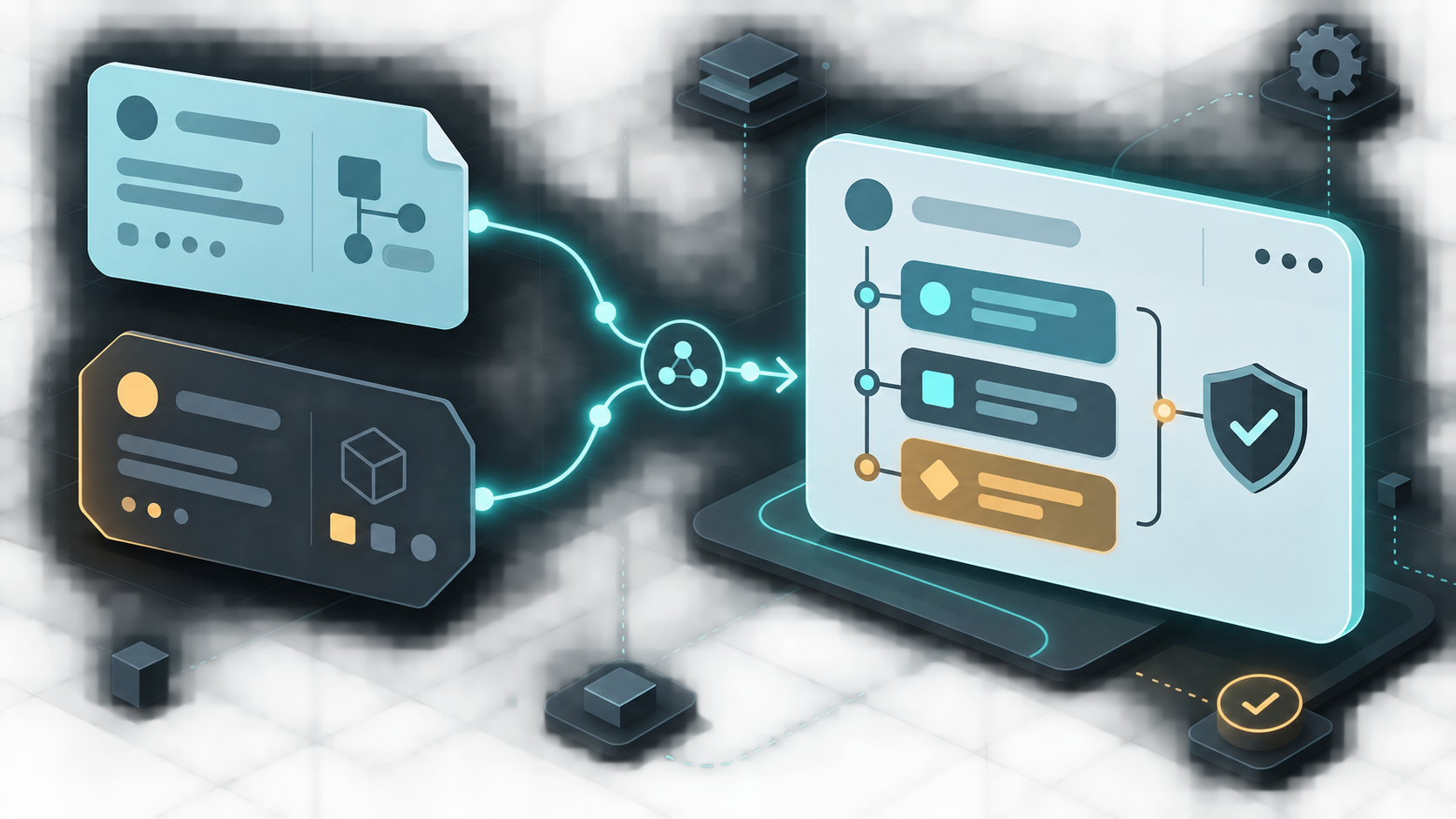
Claude Code AGENTS.md support landed on 18 September, and it is a small release-note line with an unusually useful implication: a coding agent can now use a shared project-instructions file when no CLAUDE.md is present. That moves one of the least glamorous parts of agent work — telling tools how a repository actually works — a step closer to being portable.
Claude Code AGENTS.md: the big signal
Anthropic’s Claude Code changelog says version 2.1.277 will read AGENTS.md in a project that does not have a CLAUDE.md. The choice can be changed under “Project instructions” in /config. Anthropic also notes an important boundary: the feature is not yet available on Bedrock, Vertex or Foundry.
That is not a new model or a benchmark claim. It is a compatibility decision. AGENTS.md describes itself as a simple, open format for agent-focused project context: setup commands, test commands, conventions and constraints that are useful to an automated contributor but would clutter a human README. The project says the format is already used by more than 60,000 open-source projects.
For teams that use more than one coding assistant, this matters. A repository commonly accumulates a different instruction file for every tool. The result is drift: one agent is told how to run tests, another gets an older deployment rule, and a third is missing the “do not touch this directory” constraint. Claude Code AGENTS.md support does not erase those differences, but it makes a shared baseline more realistic.
A file is not a governance model
It would be a mistake to treat an instruction file as a security boundary. It is context, not enforcement. A good repository instruction file can tell an agent to use a staging environment, avoid production data, run a test suite and ask before a destructive command. The actual controls still need to live in permissions, credentials, CI checks, branch protection and review.
That distinction is especially relevant when agents can browse, execute shell commands and call external tools. A compact, explicit instruction layer is valuable because it makes the intended operating model inspectable. But it should complement the output contracts and approval points a team relies on, not replace them.
- Keep the shared file operational. Include install, test and build commands; name generated files; state the smallest safe validation step.
- Separate policy from secrets. State where secrets must not go, but never put credentials in instructions or example commands.
- Make exceptions visible. If a repository needs a tool-specific rule, document why it differs rather than silently letting the files diverge.
- Test the instructions. A fresh agent run is a better test than a document review. Can it get from clone to a passing check without guessing?
Open-source watch
The release lands amid continued interest in open-weight and local agent tooling. Hugging Face’s trending list still includes DeepSeek V4.1 Flash, Qwen 3.8, Lightricks LTX-2.5 and several GGUF builds. Those are not all new announcements, but they underline a practical point: teams are assembling agent stacks from more than one model and more than one runtime.
One small project that surfaced on Hacker News this week is Forcefield, a Go-based local-first agent harness. Its repository describes tools, skills, sessions, memory, permissions and provider communication in a single binary, with local or remote models and no required telemetry. It is early-stage, not a default recommendation. Still, it is a useful reminder that “agent portability” is not only about model APIs; it also involves instructions, tools and the boundary around data.
That is why model portability needs an adjacent discipline: instruction portability. If a team can swap a model but loses its operating context, it has not really preserved its workflow.
Why this matters for meLink
meLink is built around useful agentic systems that respect boundaries. A website assistant, a visual orchestration flow or a personal coordinator should not depend on hidden tribal knowledge to understand its job. The more a team can express an agent’s role, escalation rules and validation steps in an auditable shared layer, the easier it is to review and improve that system.
Claude Code AGENTS.md support is a developer-tool change, but the pattern applies more broadly. A reliable assistant needs a clear brief, explicit handoffs and a route to a human when confidence or authority runs out. This is the same operational thinking behind a roadmap for agent identity: know what is acting, what it is allowed to do and where its instructions come from.
The practical takeaway
If your team uses coding agents, take 30 minutes to open the instruction files in one active repository. Consolidate the durable project facts into a short shared format, remove stale commands and add one real verification path. Then keep tool-specific configuration only where it truly adds value.
Claude Code’s new fallback will not make agents interchangeable. It does make it easier to stop treating every agent as a separate island. For small teams, that is the useful part: less repeated explanation, fewer invisible differences and a clearer place to improve how automated work gets done.


Leave a Reply