
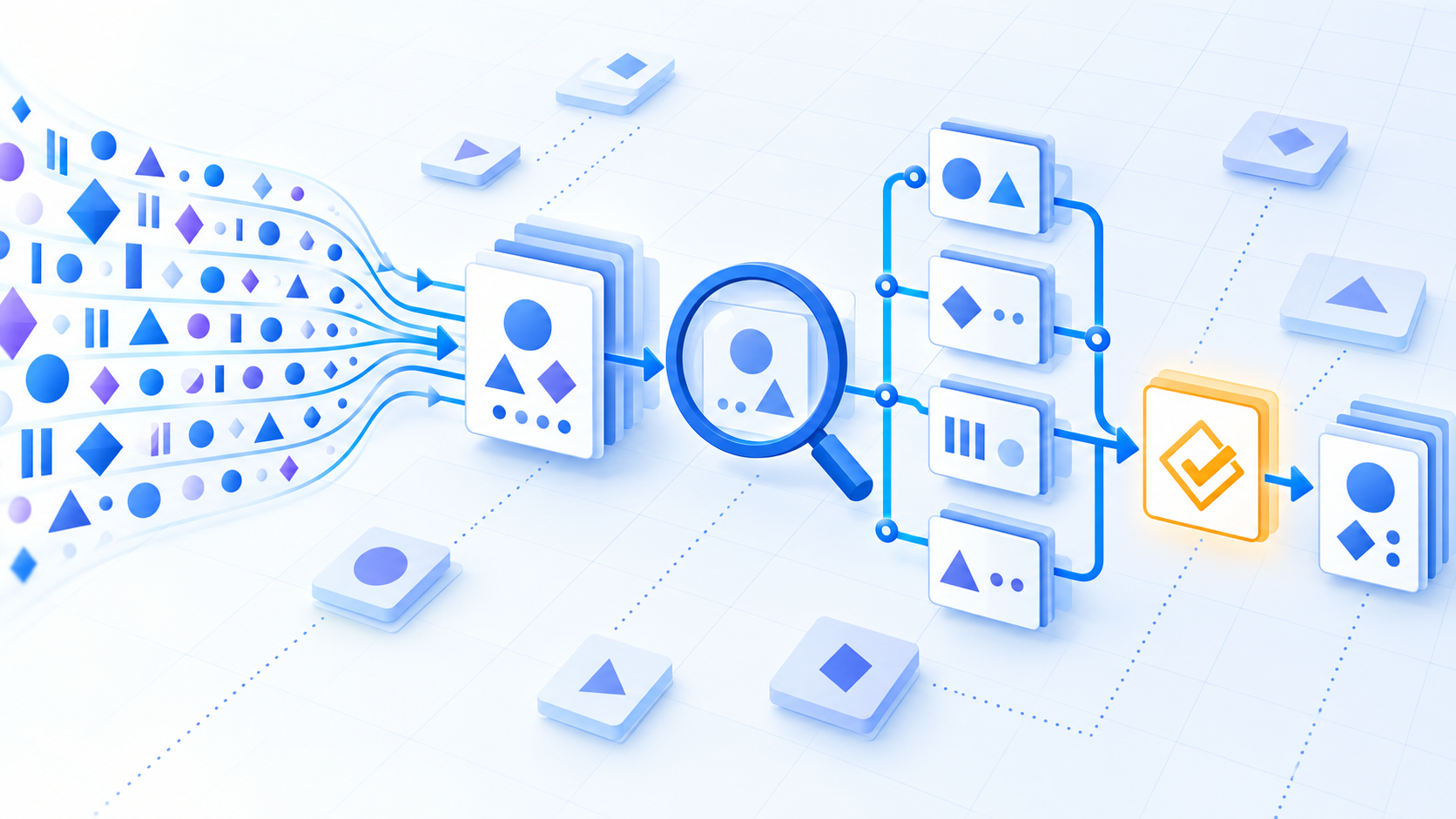
Fable 5.1 has been credited with finding a solution to the Cyphral Distich, a 17th-century cipher that had resisted published attempts for generations. The striking part is not the historical trivia. It is the shape of the work: an agent was given an open-ended research problem, searched for structure across a source text, formed a hypothesis, and produced a result that others can try to check.
The big signal
According to Vals AI’s account of the run, Fable 5.1 worked for 44 minutes, used 176,000 tokens and received no operator intervention while investigating Sir Thomas Urquhart’s Cyphral Distich. The puzzle is 64 numbers arranged in two lines. Vals says the model noticed that the surrounding book contains 32 “Proquiritations” and that each cipher line also contains 32 numbers. Its proposed rule maps each number to a word position in the corresponding Proquiritation, then takes that word’s first letter.
The reported plaintext is historically plausible: a royalist prayer for Charles II from a writer known for royalist sympathies. That coherence matters, but the more useful signal for builders is the workflow. This was not a single answer to a neatly bounded question. It was a sequence of source inspection, pattern selection, hypothesis testing and explanation. That is closer to the research tasks agents are increasingly asked to do for a business: investigate a disputed claim, trace a policy through documentation, or reconcile a customer issue across messy records.
It also shows why a long-running agent is not automatically a trusted agent. Fable 5.1 could explore broadly because the task allowed it to keep going. But the output is valuable only if someone else can retrace the route from the numbers to the source pages and decide whether the interpretation holds.
The claim needs a test
This is a reported solution, not a settled historical finding. Vals itself uses careful language: the cipher “appears” to have been solved. A separate review of the claim argues that independent checking is still needed, including access to the relevant editions and verification of ambiguous positions. That caveat should not be buried beneath the impressive runtime.
For teams adopting agents, this distinction is operational. A model can generate a persuasive chain of reasoning that is wrong, incomplete or impossible to reproduce. The answer is not to ban autonomy; it is to define an evidence contract before the task starts. Ask an agent to retain the source URLs and version identifiers it used, state the assumptions behind each inference, separate observations from conclusions, and flag anything it could not verify. A human reviewer then has a bounded packet to inspect instead of a confident paragraph to trust.
That is the same design principle behind an agent operations warning: capability has to be paired with containment, review and a record of what happened. It also complements output contracts for AI systems, where a useful response includes the conditions required to use it safely—not just a fluent conclusion.
Open-source watch
The current open-model list reinforces the same point: deployment options are expanding, but capability claims still need to be matched to the job.
- MiniCPM5-2B is a compact open model aimed at local assistants, tool use and agentic tasks, with GGUF and MLX formats listed alongside a 131,072-token context. For a privacy-sensitive workflow, the practical attraction is testing narrowly scoped tasks near the data rather than sending every interaction to a remote model.
- Edge0-35B-A3B-preview is an instructive counterweight. Its project describes a 35B-class sparse MoE running with about 3 GiB of active memory through streaming inference, while explicitly saying this preview is weak at tool use, multistep planning and long-horizon autonomy. A remarkable footprint does not equal production readiness.
- Nex-N2.5 is an open-weight agent family targeting computer use, browsing and visually grounded tasks. The useful question for a small team is not whether the largest tier is impressive; it is whether a chosen tier can produce inspectable actions, recover cleanly from failure and fit the available serving budget.
What builders should take from this
Fable 5.1 is a good reminder that the next useful unit of AI work is often an investigation, not a chat turn. A website assistant may need to trace a customer’s question through product information and policy pages. An orchestration system may need to compare several tool outputs before it recommends an action. A personal AI may need to explain which source changed and why its plan changed with it.
For meLink, that means treating provenance as part of the agent experience. An assistant should be able to cover a site after hours, but it should also make clear which page supports an answer, where confidence ends, and when a human needs to decide. Model portability matters here too: if evidence and task state live in a clear, portable record, a team can change models without losing the ability to audit its work.
The practical takeaway
Use the Fable 5.1 story as a prompt to test your own agent workflows. Pick one research task with a known answer or an accountable reviewer. Require a source list, a step-by-step evidence trail, an explicit uncertainty statement and a stop condition. Then review the trail before you judge the final answer.
The exciting result is not that an AI may have cracked an old cipher. It is that agents are becoming capable of work that looks like investigation. The durable advantage will go to teams that make those investigations legible enough to check, improve and trust.

Leave a Reply