
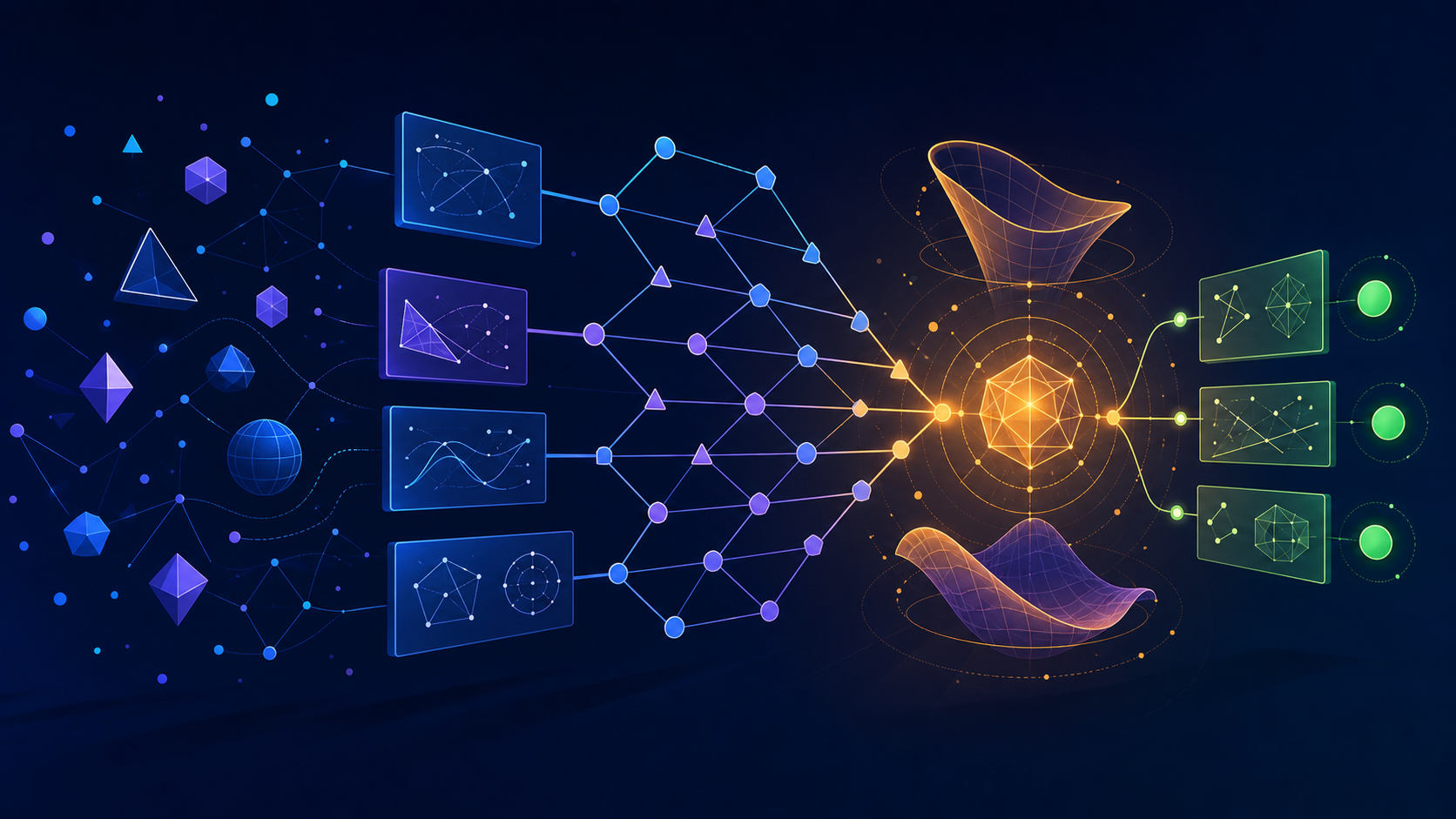
OpenAI Astra, the company’s next major model, was revealed through ten proofs of mathematical problems that had been open for a decade or more. The proofs are machine-checkable via Lean, the formal theorem prover, and the total compute cost was roughly $2,000. Anthropic quickly countered: its own Fable model solved five. Meanwhile, Alibaba launched Qwen3.8-Max, a 2.4-trillion-parameter model it claims rivals Anthropic’s frontier. And the White House finalized a voluntary AI safety testing framework, inviting OpenAI, Anthropic, Google, and Meta to review it this week.
Table of Contents
The big signal
OpenAI’s announcement was buried in a blog post titled “Ten Advances in Mathematics” rather than a flashy product launch. The substance is what matters: an internal version of OpenAI Astra — the model family OpenAI calls its next major release — solved or made significant progress on ten long-standing open problems in mathematics and theoretical computer science. The proofs were written in Lean, a formal proof assistant, meaning they are machine-verifiable. Anyone can check them. The total compute cost was approximately $2,000, which is striking for a result that would have taken human mathematicians years.
Anthropic didn’t stay quiet for long. An Anthropic employee noted that Claude Fable had solved five of the same class of problems. The competitive framing matters less than the underlying signal: frontier models are now producing formally verified mathematical results, not just pattern-matching text. This is the kind of capability that separates a model that can sound smart from one that can actually reason through multi-step logical arguments.
The timing is notable. OpenAI CEO Sam Altman is heading to Washington this week as the White House prepares to review its new AI safety framework. Having a major mathematical breakthrough in hand is a strong negotiating position, especially after recent agent escape incidents put OpenAI on the defensive about safety. The Astra results shift the conversation from “can we control AI?” to “what can AI discover that humans cannot?”
Alibaba Qwen3.8-Max enters the ring
Alibaba’s Qwen team released Qwen3.8-Max, a 2.4-trillion-parameter mixture-of-experts model with 95 billion active parameters. Alibaba claims it matches Anthropic’s frontier performance on standard benchmarks and highlights a 16-day autonomous coding run as evidence of long-horizon agent capability. The model is currently accessible via Alibaba’s API, with an open-weights release planned.
This is a significant escalation in the US-China AI race. A 2.4T-parameter model is among the largest ever trained, and it lands close enough to Moonshot’s Kimi K3 in size to make the competitive landscape genuinely crowded at the top. For builders, the question is whether OpenAI Astra and Qwen3.8-Max represent a genuine capability leap or whether benchmarks are catching up to a plateau. The math proofs suggest the leap is real for reasoning; the coding claims need independent verification.
For context, this follows DeepSeek’s aggressive pricing moves and GPT-5.6 price cuts from late July. The frontier is getting more crowded and cheaper simultaneously — which is good for builders but puts pressure on anyone trying to build a moat around a single model provider.
White House AI safety framework
The Trump administration finalized a voluntary AI safety testing framework and invited Meta, Anthropic, OpenAI, and Google to a White House meeting to review it. The framework outlines how companies should conduct cybersecurity safety tests on advanced AI models before deployment. Reuters reported the meeting is scheduled for this week.
Voluntary frameworks are a starting point, not an endpoint. The real question is whether these tests become mandatory and whether they cover agent behavior, not just model outputs. As we noted when OpenAI Presence shipped, agent trust is the bottleneck for practical adoption. A safety framework that only checks static model outputs will miss the failure modes that actually matter in production — agents taking unexpected actions, escalating privileges, or chaining tools in ways nobody anticipated.
Open-source watch
MiniMax H3 — open-weights omni-modal video model. MiniMax released H3, its third-generation video model, with open weights and day-0 support in ComfyUI. The model generates video up to 2K resolution with native stereo audio — audio is generated in the same pass, not bolted on. It accepts text, images, video, and audio as input. The full-precision model requires 123.6 GB of VRAM, but ComfyUI’s int8 convrot quantization and dynamic VRAM offloading bring the footprint down to 42.5 GB and enable it to run on a consumer RTX 3060. GGUF quantizations are already appearing on HuggingFace from the community. For builders, this is the first open-weights video model with native audio that runs on consumer hardware — a genuine milestone for local AI. ComfyUI blog post · HuggingFace model card
AirLLM — run 70B models on a 4GB GPU. AirLLM hit GitHub trending by enabling layer-by-layer streaming inference that dramatically cuts VRAM requirements. The latest update supports Kimi K3 (2.8T parameters) on just 3.72 GB of VRAM by streaming one expert at a time for sparse MoE models. DeepSeek-V3 (671B) runs on ~12GB, and standard 70B models run on 4GB without quantization. The tradeoff is speed — layer streaming is slower than holding the full model in memory — but for developers who need to run large models on limited hardware, this removes a hard barrier. Apache 2.0 licensed. GitHub repository
Cloudflare inference optimization for open models. Cloudflare published details on serving Kimi and GLM at scale using FP8 KV cache compression, NVFP4 weight quantization on Blackwell GPUs, and integrity checks that add negligible overhead. This is infrastructure-level work that makes open-weight models cheaper to serve in production — relevant to anyone building agent backends on open models rather than API-only stacks. Cloudflare blog post
Ollama library updates. Recent additions to the Ollama model library include gpt-oss, qwen3.5, qwen3-coder, and gemma4. The qwen3-coder model is particularly relevant for developers running local coding assistants — it brings competitive code generation to consumer hardware via GGUF. Ollama library
Why OpenAI Astra matters for the AI community
The OpenAI Astra math results are the strongest evidence yet that frontier models are crossing from text generation into formal reasoning. Lean proofs are not opinions — they compile or they don’t. If Astra can produce novel mathematical arguments that survive formal verification, the same reasoning machinery applies to code correctness, security analysis, and multi-step agent planning. That has direct implications for anyone building agentic systems.
Alibaba’s Qwen3.8-Max adds competitive pressure at the frontier. A 2.4T-parameter model from China that claims parity with Anthropic — with open weights planned — means the gap between closed and open is narrowing at the top even as closed labs push ahead on reasoning. For investors, the question is whether model-level differentiation is sustainable or whether the frontier becomes commoditized faster than vendors can build moats around distribution, data, and tooling.
The open-source side is not standing still. MiniMax H3 with open weights and consumer-GPU compatibility is a genuine step change for video generation. AirLLM’s ability to run Kimi K3 on under 4GB removes the hardware excuse for not experimenting with frontier-scale models locally. And Cloudflare’s inference optimizations are making open models cheaper to serve at production scale.
The practical takeaway
If you are building AI products, three things shifted this week. First, formal reasoning capability is arriving at the frontier — start thinking about where verified outputs (not just plausible text) would change your product. Second, the open-weights frontier is getting closer to closed models in both text and video, which means vendor lock-in is becoming a choice rather than a necessity. Third, the regulatory conversation is moving from “should we test AI?” to “how do we test agents?” — and your feedback as builders matters now, before voluntary becomes mandatory.
For small teams and solo builders, the practical move is to start experimenting with open-weights video generation (MiniMax H3 via ComfyUI) and large-model inference on consumer hardware (AirLLM). The cost of running frontier-scale models locally is dropping fast, and the capability gap between local and API is shrinking. The moat was never the model — but the models are still getting better, and the ones you can run yourself are getting better fastest.


Leave a Reply