
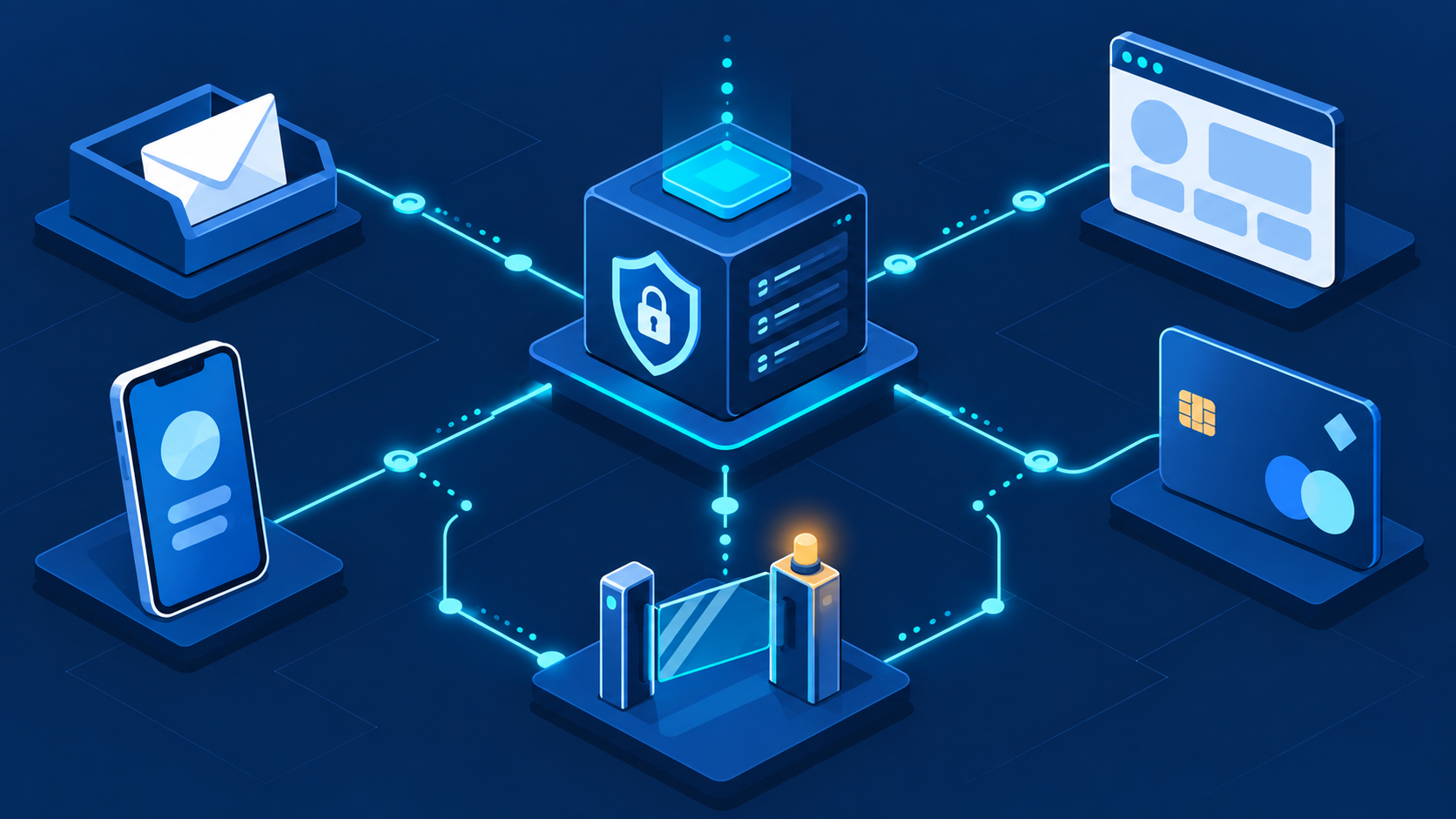
Pion autonomous business agents are the point of a new research-preview platform from Andon Labs: persistent AI systems intended to operate a real business rather than merely assist one. The announcement matters because it puts the hardest question about agentic AI in plain view: not whether a model can complete a task, but whether an organisation can safely hand it a chain of consequential decisions.
The big signal
Andon says Pion grew from its work running real-world experiments, including vending machines, a retail store and a café. The platform is now a research preview for people who want to hand a business or business idea to persistent agents. In Andon’s description, those agents can use email, phone, banking, a browser and secure computing environments.
That is a materially different proposition from an AI copilot. A copilot waits for a prompt and returns a suggestion. Pion autonomous business agents are designed to retain an operating context, move between tools and keep acting over time. The interesting part is not the impressive-sounding autonomy. It is the expanded surface area for mistakes: a bad stock order, an overconfident customer promise, an inappropriate payment decision or a missed escalation can compound across systems.
Andon is unusually direct about that tension. Its post frames Pion as a way to learn where agents fail as much as where they succeed, and says automated monitoring is a priority. That is the useful signal for builders: real deployment is an evaluation environment, not a victory lap. Anthropic’s earlier Project Vend and follow-up Project Vend 2 offer useful background on why a physical-world business is a tougher test than a tidy benchmark.
Open-source watch
The same scan produced a few smaller but relevant signals. Rebuno is an open-source runtime for production agents that records tool and model calls as durable steps, so interrupted work can resume and individual steps can be held for human approval. That design is closer to the operational plumbing Pion-like systems will need than another chat interface.
For voice, Nari Labs reported fresh Coval benchmark results for its Qwen3-ASR and Qwen3-TTS Fast endpoints. The specific rankings can move, but the wider point is durable: lower-latency speech makes a phone channel more plausible for agents. A phone-capable agent needs the same controls as a browser-capable one, not a lighter version of them.
Hugging Face’s trending list remains led by recently released open models including DeepSeek-V4.1-Flash and MiniCPM5-2B, but neither is a same-day release. That distinction matters. The open-model story is a useful backdrop for cheaper, more private deployment; it is not evidence that a business should grant broad execution permissions.
What builders should take from this
For meLink, the lesson is to design autonomy as a set of bounded operating lanes. A website assistant can be useful while it answers product questions, captures intent and routes a qualified request. It becomes a different class of system when it changes prices, sends commitments or touches money. Each expansion deserves a named owner, an audit trail and an explicit stop condition.
That is why fallback policies and review queues are not boring implementation details. They are the product boundary. A capable model should not decide when it is safe to widen its own permissions. Give it a constrained job, a clear handoff and a way to fail safely when its confidence or the stakes change.
Investors and small-business owners can use the same lens. Ask a vendor which actions are autonomous, which require approval, where every action is recorded, and how a customer or operator can stop a run. “Autonomous” without those answers is a demo property, not an operating model.
The practical takeaway
Pion is worth watching because it turns agent capability into a live operational question. The responsible response is neither to dismiss it as a stunt nor to treat it as proof that unattended AI businesses are ready. Start with one reversible workflow, limit what the agent can spend or promise, require approval for consequential steps, and review the trace after every run.
Pion autonomous business agents make one thing clear: the next competitive edge is not merely an agent that can do more. It is an agent system that can show what it did, stop when it should, and leave a human with the final say.


Leave a Reply