
Gemini 3.6 Flash is the important AI release this morning, not because another model name appeared, but because Google is putting a fast model, a lighter variant, and a cyber-focused variant into one product move. For teams building agents, that is a useful change in the menu: model choice is becoming more about the job, the risk, and the operating cost than a single flagship contest. Microsoft and Mistral added a second signal on the enterprise side, while Cisco’s new open-weight security models offer a smaller but practical counterpoint.
The big signal: Gemini 3.6 Flash targets working agents
Google introduced Gemini 3.6 Flash, 3.5 Flash-Lite and 3.5 Flash Cyber on July 21. The names matter less than the packaging. A company running an always-on website assistant or a multi-step workflow does not need every request to receive the slowest, most expensive possible answer. It needs a reliable way to send routine work to a fast model, keep lighter tasks light, and reserve higher-cost reasoning or human review for the moments that warrant it.
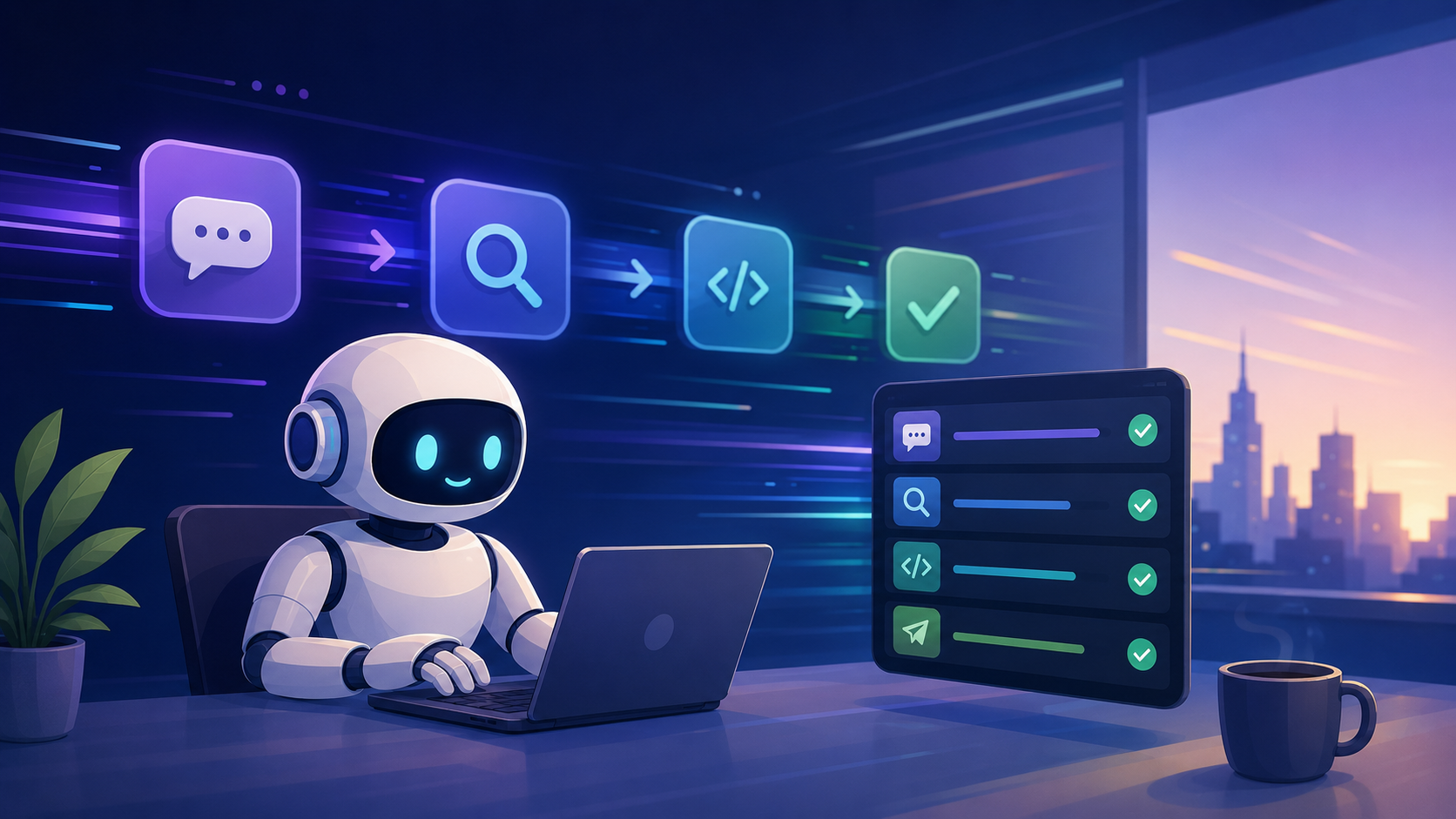
That is why Gemini 3.6 Flash is worth watching through an agent lens. The more an assistant takes actions rather than merely drafts text, the more calls it makes: reading context, checking a policy, retrieving a product answer, updating a handoff, and recording what happened. Small improvements in speed and model fit compound across that chain. But a faster agent is not automatically a better agent. The business value comes from clear permissions, useful context, and a path to a person when the task stops being routine.
Google’s separate cyber model is also a reminder that specialisation is becoming a real product decision. A model aimed at security work may be valuable in a carefully controlled workflow, but it should not quietly become the default brain for customer-facing automation. Builders should choose models by the kind of work and the controls around it, rather than assuming one general-purpose endpoint is the safest answer to everything.
Enterprise control is becoming part of the model decision
The day also brought a more commercial version of the same idea. Microsoft and Mistral expanded their strategic partnership, explicitly positioning the work around frontier AI that enterprises and regulated industries can control. That is a sharper framing than the usual benchmark race. It puts location, governance, deployment choice, and operational ownership alongside raw capability.
For buyers, this is a useful distinction. “Private” is not a magic setting and “enterprise” is not a security architecture. Ask where prompts and retrieved data travel, which team can change an agent’s tools, what gets logged, how long it is retained, and whether a workflow can be paused. A smaller company does not need a multinational compliance programme to ask those questions. It needs a simple, documented answer before it places an agent between a customer and a real system.
That is consistent with the practical habits behind a verifiable definition of done for AI tasks: an agent should leave enough evidence for a person to check what it did, not just a confident final sentence. Model routing is part of that operating design. So are approvals and escalation paths.
Open-source watch
Cisco introduced Antares open-weight models for vulnerability localization. It is not a general-purpose rival to Gemini or Claude; that is precisely why it is useful. The release is another example of a model being shaped for a bounded, auditable job rather than sold as an all-purpose employee.
Open weights do not remove the need for evaluation. They move more responsibility to the team serving them: validating the model against its intended task, securing the environment, monitoring updates, and deciding what never leaves the business. Still, for privacy-sensitive workflows, local AI remains a credible option when the task is narrow enough and the operational trade-off is understood. The open-source shelf is most helpful when it gives teams a controllable alternative, not when it encourages them to install a model and call the hard parts solved.
What builders should take from this
- Route work by consequence. Use a fast model for classification, retrieval, and first-pass drafting; use stronger review or a person for commitments, payments, account changes, and exceptions.
- Make provider choice reversible. Keep prompts, tool contracts, and evaluation cases separate from any one model vendor. That makes a change in price, capacity, or policy manageable rather than existential.
- Treat control as a feature. A deployment option is only useful if the team can explain data flow, permissions, logs, and the off switch to a customer or colleague.
These are not abstract cautions. They are how a website assistant stays helpful at 2am without inventing a discount, exposing a record, or making a promise the business cannot keep. The same pattern appears in setting spend limits before giving an AI agent more autonomy: boundaries are what make unattended work sustainable.
The practical takeaway
Gemini 3.6 Flash is a sign that useful agent infrastructure is becoming a portfolio, not a winner-take-all model choice. Google is offering distinct performance and use-case lanes; Microsoft and Mistral are foregrounding controlled enterprise deployment; Cisco is showing where a focused open-weight model can fit. For investors, the opportunity is increasingly in the layer that makes those options reliable in real work. For small teams, the immediate move is simpler: map one repetitive workflow, decide what it may do without approval, and choose the cheapest capable model only after that design is clear.

Leave a Reply