

Google Antigravity Boost is a new /boost mode for difficult engineering work: it turns one hard problem into a planned set of focused agent workstreams, then asks the system to verify and combine the result. That is a more useful direction than simply asking an agent to “try harder.” It makes the route to an answer part of the product.
The big signal
Google’s Boost documentation describes an on-demand multi-agent reasoning pipeline for the awkward middle of software work: too hard for a quick prompt, but not necessarily a months-long programme. Think concurrency bugs, obscure regressions, performance investigations or a refactor whose consequences reach beyond one file.
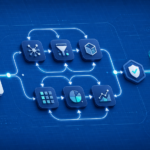
The documented flow has three stages. First, an orchestrator inspects the workspace and breaks the goal into verifiable tasks. Next, focused agents work in isolated scopes: one might investigate a call path while another writes a candidate change and another runs targeted tests. Finally, the system brings those findings together, runs regression checks and feeds a failing assertion back into another iteration.
That framing matters. The interesting claim is not that a group of agents is automatically smarter than one. It is that a coding tool can deliberately separate exploration, change-making and checking. For teams experimenting with agentic development, that division is more valuable than a shiny “autonomous” label.
Where Google Antigravity Boost changes the workflow
Google Antigravity Boost makes verification an explicit part of the path rather than a hope at the end of a long chat. A single agent can produce a convincing patch and a convincing explanation for why it works. It can also miss a dependency, misunderstand an old test fixture or optimise the visible symptom while leaving the failure mode in place. Parallel work is only useful when the outputs meet at a testable boundary.
There is a practical pattern here for smaller teams. Give investigation work read-only scope. Give implementation work a narrow branch or isolated worktree. Ask a separate pass to name the test commands, acceptance criteria and assumptions that would falsify the proposed fix. Then require a person to approve the change that crosses into a customer-facing system. This is close to the boundary-first approach behind meLink’s recent ChatGPT Work analysis: the important question is what an agent may touch, not merely what it can compose.
It also helps explain why “more agents” is not a strategy on its own. More parallel attempts can multiply duplicate work, conflicting edits and noisy conclusions. Google Antigravity Boost is most interesting when its orchestration layer keeps the workstreams distinct and its final pass has an observable job: test the combined result against the real requirements.
Open-source watch
No fresh open-weight release in this morning’s scan displaced the Google feature, but the ecosystem around agent stacks remains active. Qwen3.8-Flash-Next, Z.ai’s GLM-5.3, Tencent’s Hy4 preview and Lightricks’ LTX-2.5 remain prominent on Hugging Face. They are context, not today’s headline.
For builders, that is still useful context. Better models and open weights expand routing choices, but orchestration determines whether those choices produce a dependable service. A large-context model may be excellent at tracing a system; a smaller local model may be better for a bounded classification step. The lesson from meLink’s Hy4 preview coverage still holds: evaluate the actual workflow, including hand-offs and recovery, rather than promoting a model because a benchmark says it is capable.
What builders should take from this
- Split roles, not responsibility. Let an agent investigate, another propose a patch and a third challenge it, but keep a named person accountable for the final operational decision.
- Make verification concrete. “Check your work” is vague. A useful request identifies the build, tests, expected behaviour and a failure condition.
- Keep scopes narrow. Isolated workstreams reduce accidental collisions, but they also make it easier to see which evidence supports which conclusion.
- Log the route. For a website assistant or business workflow, record source inputs, tools used, checks passed and the hand-off point. That makes a bad outcome diagnosable instead of mysterious.
That is directly relevant to meLink. An always-on website assistant should be able to research approved information, draft a response and escalate an exception without quietly inventing a new policy. Visual orchestration in meLink avo should make each route and approval legible. The promise of a multi-agent pattern is not hidden complexity; it is a clearer way to assign capability while preserving a place for review.
The practical takeaway
Use Google Antigravity Boost, or a comparable workflow, on one problem that has a real definition of done and a safe test environment. Ask for the plan before the patch. Separate investigation from modification. Require a verification report that names what ran and what remains uncertain. And make “do not deploy or send without approval” a product rule, not a sentence buried in a prompt.
The strongest agent products will not win because they remove every checkpoint. They will win because they make the right checkpoints inexpensive enough that people actually use them.

Leave a Reply