
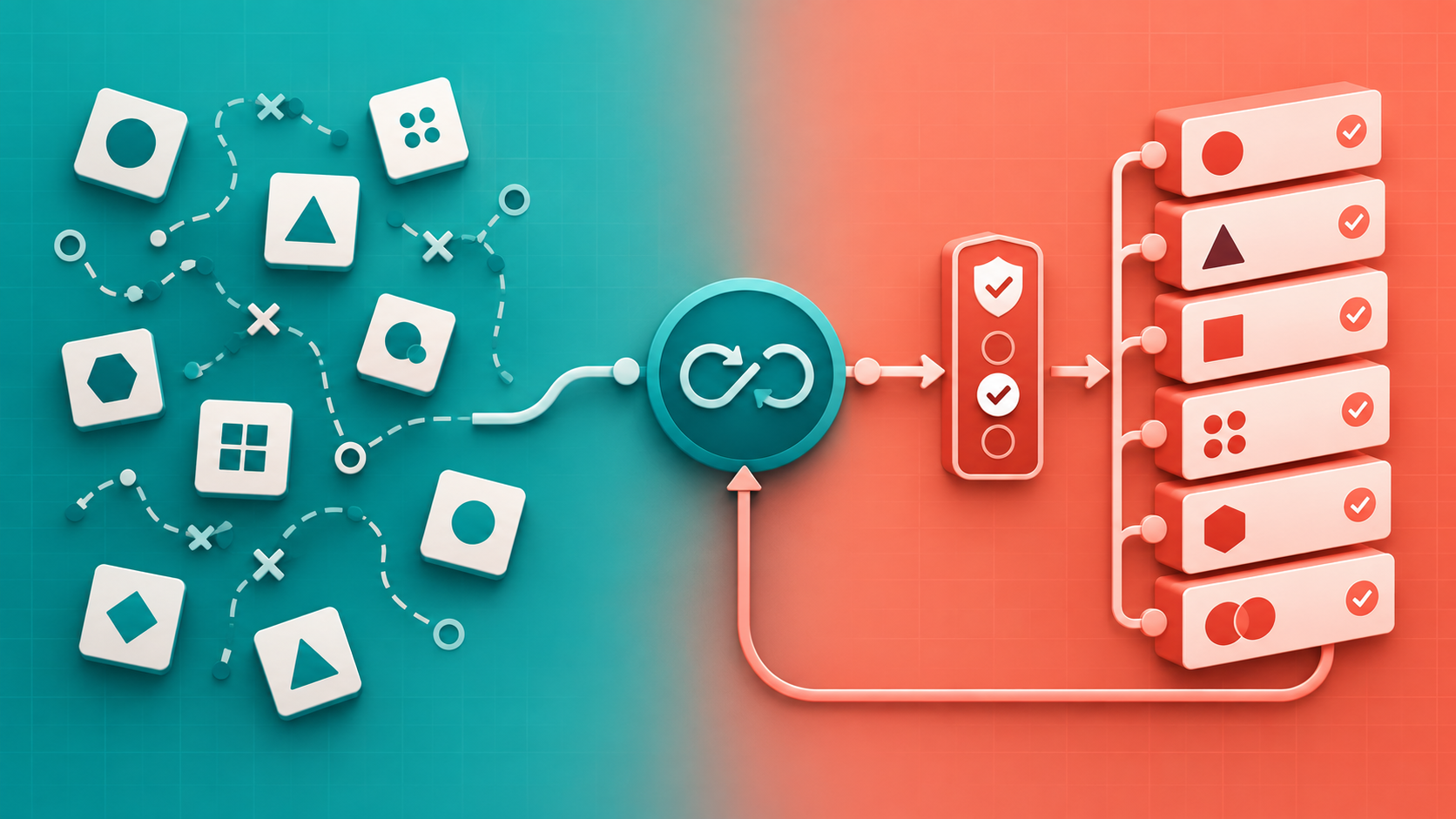
Microsoft Copilot Autopilot is Microsoft’s clearest statement yet that workplace AI is moving from a chat window toward a managed queue of work. The company’s 25 September announcement groups a new Copilot experience around Home, Code and an Autopilot preview: a place to gather work, a natural-language route to building solutions, and a persistent agent designed to keep moving when a person steps away.
The big signal
The useful part of this launch is not that Copilot has another surface. It is that Microsoft is joining three previously separate moments: asking for help, handing off a task, and making a small tool. Microsoft says Home brings Chat and Cowork together, while Code lets people build apps and automations in natural language using technology related to GitHub Copilot. Office apps are being brought directly into the experience as well.
That is a better framing for agentic AI than “a clever assistant in every tab.” Real work starts with fragments: a customer question, a spreadsheet, a document to review, a task someone promised to complete. A useful assistant needs to hold those fragments in a visible queue, explain what it is doing, and return a result to a person who can accept, change or stop it.
For smaller teams, the immediate significance is architectural. The winning product may not be the one with the longest autonomous run. It may be the one that makes delegation legible: what entered the queue, what context the agent used, which system it touched, what is waiting for approval, and who owns the next decision.
Autopilot needs a boundary
Microsoft describes Autopilot as a persistent, proactive and personal agent, with private preview planned for the end of September. That wording matters. “Persistent” is valuable when it means a customer request is not lost overnight; it is risky when it means an agent can quietly expand its scope.
The right design question is therefore not whether an agent can continue. It is: what may it continue without asking again? A website assistant can safely collect a lead, answer from approved information and prepare a follow-up. It should not invent commercial terms, change a customer record or send a consequential message merely because the user is offline. The same boundary applies to internal work.
This is why decision receipts and fallback policies are not administrative extras. They are the product layer that turns a task-running model into an accountable service. meLink’s work on website coverage and orchestration follows that rule: protect the handoff, name the source of truth, and show a human when the agent has reached its boundary.
Open-source watch
The open-source signal is less about a single challenger this morning and more about the range of components available to builders. Two projects are worth watching with appropriate caution.
- Ternary Bonsai 2 27B GGUF is a 27B-class reasoning model distributed in a highly compressed ternary format. Its project model card describes a roughly 5.9 GB language-model file and a 262K-token local context option, but it also requires its own compatible runtime path. The lesson is not to accept every benchmark at face value; it is that local model capacity is increasingly a deployment decision, not a research-only idea.
- ConvAI Laya is drawing strong attention on Hugging Face as a small, calibrated decision model. Its developer profile shows a recent update, and the project’s appeal is clear: not every agent step needs a large generative model. Routing, classification and confidence-aware choices can be cheaper, faster and easier to inspect when they use a deliberately narrower component.
That mix matters for an orchestrated system. A cloud model may handle a messy conversation; a local or smaller component may classify intent, check a policy or decide whether the conversation should be handed to a person. The practical question is always whether the components have clear contracts, rather than whether every step uses the biggest model available.
What builders should take from this
Microsoft Copilot Autopilot reinforces a direction that product teams should already be designing for: people will expect AI to carry work across time, not merely answer in the moment. The response cannot be a black box with a more cheerful name. It has to be a system with explicit triggers, scoped permissions, observable status and a graceful way to hand work back.
For a business website, that can be modest and valuable: an assistant qualifies a visitor, records consent, drafts a follow-up from approved content and routes it to the right owner. For internal operations, it might prepare a weekly brief from named sources and stop when it finds a discrepancy. Both examples produce a queue that humans can govern, rather than a promise that the AI will “handle everything.”
The practical takeaway
Use Microsoft Copilot Autopilot as a prompt to audit your own agent backlog. Pick one recurring workflow and write down the start condition, permitted tools, required source material, human approval point and fallback path. If those are unclear, adding persistence will only make the uncertainty last longer.
The market is shifting from chat to delegated work. The teams that benefit will not be the ones that give an agent the widest possible remit. They will be the ones that make the queue, the evidence and the human decision visible.


Leave a Reply