
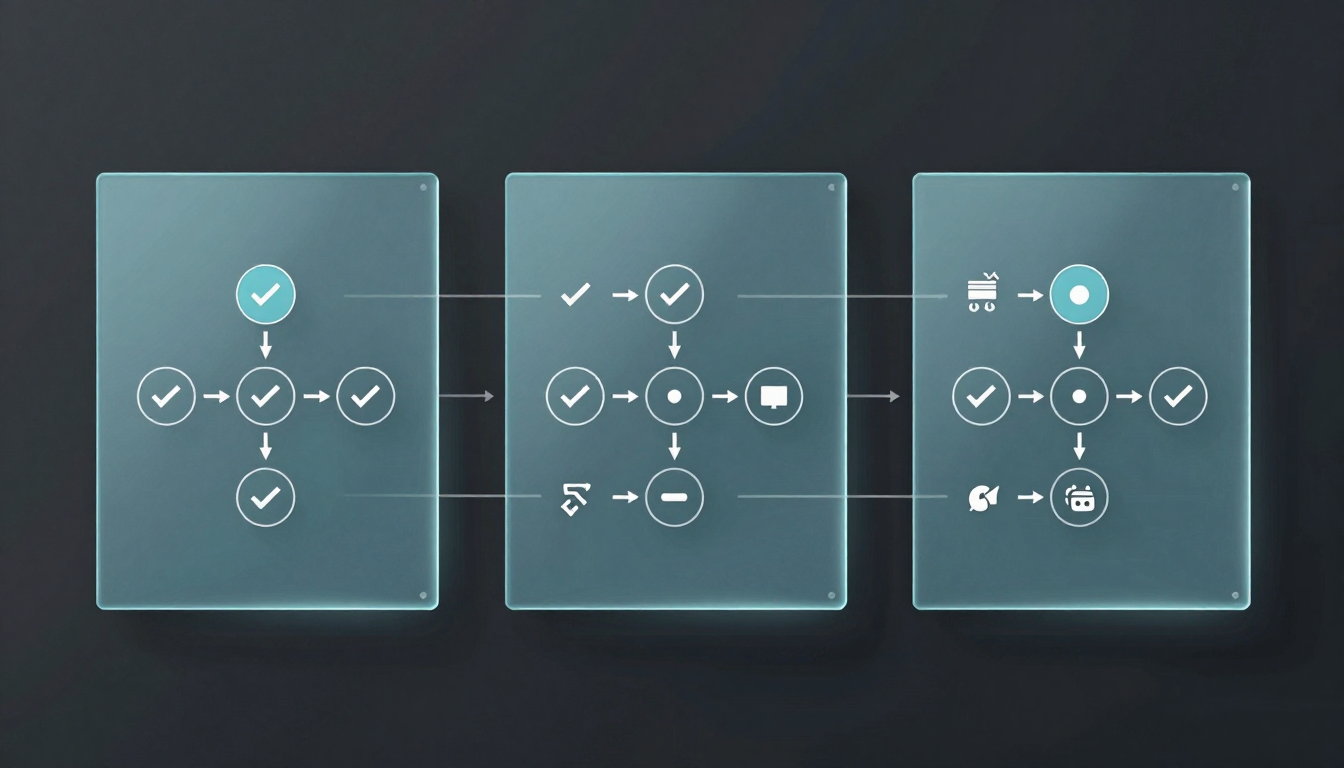
There is a moment in almost every AI conversation where the excitement turns into a more serious question: who is allowed to say yes?
Not “can the model do it?” Not “is the demo impressive?” Those are early questions. The business question is different. If an AI assistant drafts a quote, responds to a lead, updates a CRM field, changes a campaign, recommends a supplier, or prepares a customer reply, what happens before that action becomes real?
That is where a lot of practical AI adoption will be won or lost. The next useful layer is not a bigger prompt box. It is an approval layer.
The missing layer between chat and action
Most teams start with AI in a safe place. They ask it to write, summarize, brainstorm, explain, or tidy up work that a person still owns. That is a good start. It builds confidence without handing over control.
Then the obvious next step arrives. If the assistant can draft the reply, why can it not send it? If it can identify a qualified lead, why can it not create the task? If it can read a support thread, why can it not suggest a refund, update the account, or escalate to the right person?
This is the point where “AI tool” becomes “business software”. And business software needs permissions, records, handovers, limits, and accountability.
Useful AI is not just about generating the next answer. It is about knowing which answers are safe to act on, which need review, and which should stop.
Approvals are not anti-automation
There is a strange belief that adding human review means the automation has failed. In reality, review is often what makes automation usable.
A finance team does not become less modern because payments need sign-off. A sales team does not become less efficient because discounts have approval bands. A warehouse does not become less automated because exceptions are routed to a supervisor. Mature systems do not remove judgement everywhere. They put judgement in the right places.
AI should be treated the same way. Some tasks can run quietly in the background. Some can be completed after a quick review. Some should only prepare a recommendation. Some should never be automated at all.
The approval layer is how a team makes those distinctions visible.
A simple map for deciding what AI may do
One practical way to think about AI adoption is to sort work into four lanes.
- Assist: the AI helps a person think, write, search, compare, or prepare. Nothing happens until a human uses the output.
- Recommend: the AI proposes a next step with reasons, confidence, and supporting context. A person chooses whether to proceed.
- Act with approval: the AI prepares the action and waits for a named person or role to approve it.
- Act within limits: the AI completes low-risk tasks automatically, inside clear rules, with logs and easy rollback where possible.
This is not complicated, but it changes the conversation. Instead of asking whether AI should be “trusted”, the team asks where trust is earned, where it is bounded, and where a human decision still matters.
Small businesses need this more, not less
Large companies talk about governance because they have compliance teams. Smaller businesses often avoid the word because it sounds heavy. But the need is still there.
In a small team, one wrong promise can be expensive. A bad quote can burn margin. A careless email can damage trust. A confused assistant can send a customer down the wrong path. The risk is not abstract. It lands directly on the owner, operator, or founder.
That does not mean small teams should move slowly. It means they should automate with rails. A website assistant can answer from approved pages, collect lead details, qualify intent, and route the conversation without inventing policy. A visual workflow can let AI prepare a customer follow-up, then hold at a review step before it sends. A prompt experiment can become a reusable playbook only after the team has tested tone, boundaries, and failure cases.
This is human-first automation: reduce the load without hiding the important decisions.
What an approval layer should actually show
A useful approval step is more than a button that says “approve”. It should help the reviewer make a fast, informed decision.
- What triggered this? The source event, message, page visit, document, or workflow step.
- What did the AI use? The approved knowledge, customer context, prompt, model, and tools involved.
- What is being proposed? The exact email, CRM update, task, quote note, or next action.
- Why this action? A short explanation with the evidence that matters.
- What are the limits? Any policy boundary, confidence warning, missing data, or reason the action should be checked carefully.
- What happened after approval? A log the team can inspect later.
That may sound operational, but it is also a product experience. People adopt tools they can understand. They keep using systems that make them feel more capable, not more exposed.
Why this matters for meLink
meLink is built around a simple belief: AI should help people move with more confidence, not pressure them to hand over control before they are ready.
For meLink web, that means website coverage should be grounded and respectful. The assistant can help visitors, capture intent, and keep the conversation warm, while knowing when to hand over.
For meLink avo, the approval layer becomes even more central. Visual orchestration is powerful because it makes the work legible. You can see the steps, the agents, the tools, the checks, and the point where a person needs to decide.
For meLink prompts, approvals are part of turning a clever prompt into a reliable pattern. A prompt is not finished when it produces one good answer. It is finished when the team knows where it works, where it fails, and how it should be reviewed.
The investor signal is trust infrastructure
For investors and operators watching the AI market, the interesting companies will not only be the ones with the most impressive demos. The durable companies will make AI easier to trust in ordinary work.
That includes permissioning, audit trails, model choice, privacy controls, workflow design, escalation, and clear human review. It includes interfaces that show what happened without forcing the user to become an AI engineer. It includes defaults that keep sensitive data where it belongs.
In other words, the next wave is not just intelligence. It is trust infrastructure around intelligence.
The practical takeaway
If you are bringing AI into a business, do not start by drawing the fully automated future. Start by drawing the decision points.
Where should the assistant only help? Where should it recommend? Where should it wait for approval? Where can it act safely inside limits? Where should it never act?
Those questions are not bureaucracy. They are how AI becomes dependable enough for real teams, real customers, and real consequences.
The best automation does not make people disappear from the process. It gives them better leverage at the moments that matter.
You’ve got this.

Leave a Reply