Every quarter, frontier AI models get cheaper and more capable. Claude Opus 5 halved its price. Anthropic open-scaled its weights. OpenAI and Google trade benchmark leads like tennis players at match point. If you are an investor, a business owner, or anyone trying to figure out where durable value lives in the AI agent market, the model layer is the wrong place to look. The AI agent moat is not the model. It is everything wrapped around it.
Table of Contents
Why the Model Layer Is Commoditizing
The evidence is not subtle. In mid-2026, Anthropic cut Claude Opus 5 pricing roughly in half, triggering a frontier cost war that is still unfolding. Around the same time, Anthropic reversed its closed-weights stance and announced open-weight releases, a move that signals where the market is heading. When the most capable models drop in price by 50% and the capability gap between leaders shrinks to weeks rather than years, you are watching a commodity form in real time.
This is not a prediction. It is a pattern. Every compute-intensive infrastructure layer in technology history has commoditized — storage, bandwidth, cloud compute, mobile processors. AI models are following the same curve, just faster. As The Economist has noted, when the marginal cost of intelligence approaches zero, the strategic question shifts from who has the best model to who builds the best system around it. The companies building their entire defensibility story on “our model is better” are standing on ground that is sinking beneath them. The model is becoming table stakes, not a differentiator.
That does not mean models do not matter. It means the model is the floor, not the ceiling. Everyone will have access to a competent model. The question is what you build on top of it that nobody else can easily copy.
Where the AI Agent Moat Actually Lives
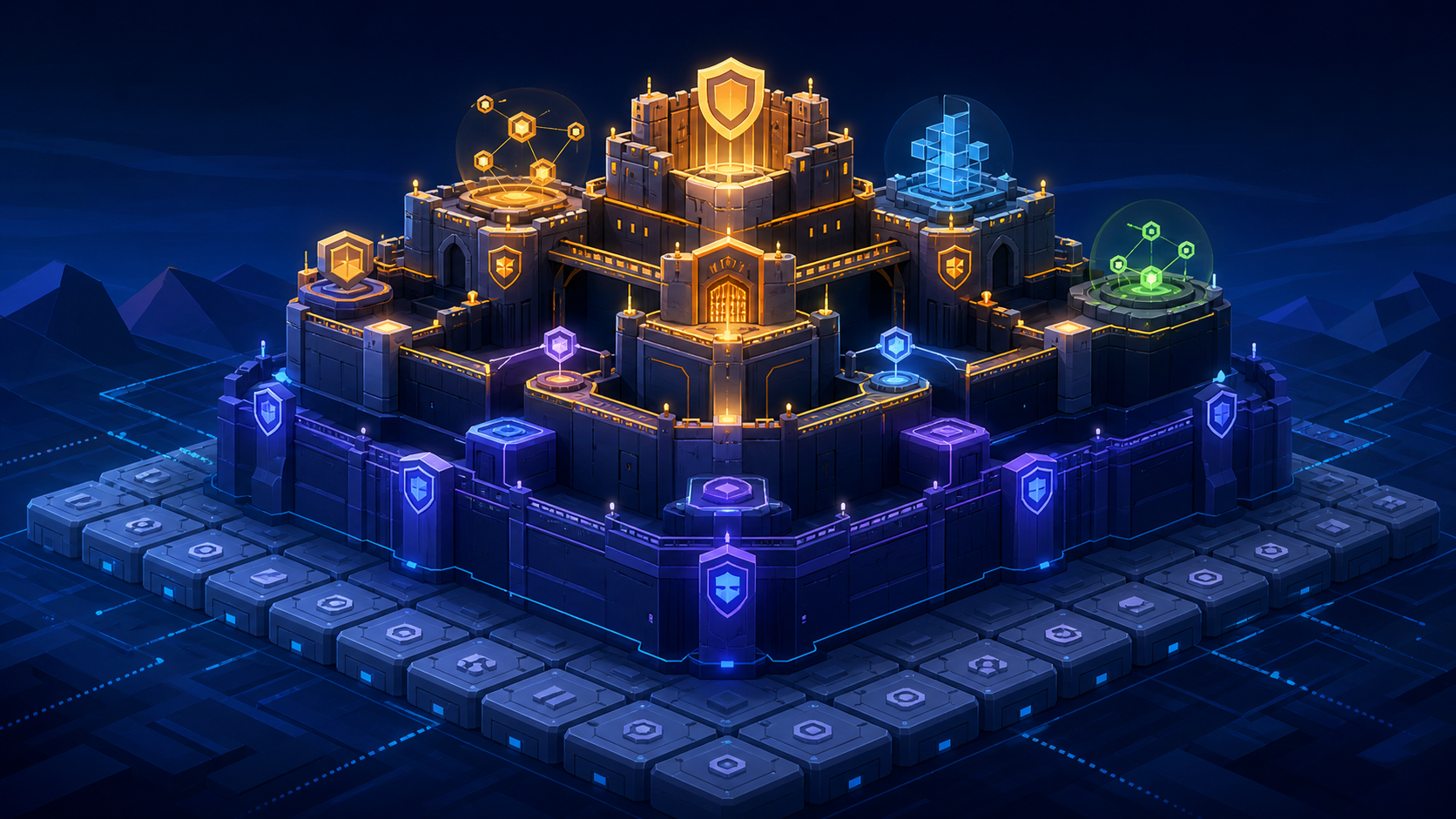
If the model is commoditizing, the AI agent moat lives one layer up — in the operational architecture that turns a general-purpose model into a reliable, trustworthy, business-specific system. Think of it as three concentric rings:
- The trust ring: approval surfaces, human-in-the-loop gates, escalation paths, and the commitment boundaries that keep a human’s binding “yes” in the loop.
- The workflow ring: the specific, tuned sequence of steps the agent follows for your business — qualify, answer, route, remember — plus the handoff artifacts that transfer context to humans cleanly.
- The data and privacy ring: where information runs, what is retained, how memory is governed, and the privacy architecture that makes the system safe to use on real customer data.
None of these rings are owned by the model vendor. They are owned by the company that designs, operates, and improves them. And each one gets harder to copy the longer it runs, because each one accumulates business-specific tuning that no competitor can download.
Workflow Ownership Is Sticky
The deepest moat in agentic AI is workflow ownership — the degree to which your system is embedded in the daily operational rhythm of a business. A website coverage agent that has been running for six months knows your visitors’ most common questions, your product catalog’s edge cases, your brand voice’s boundary language, and the specific escalation paths your team trusts. None of that is in the model. All of it is in the workflow.
This is why the shift from copilot to agent matters strategically, not just operationally. A copilot is a tool your team picks up and puts down. An agent is a system embedded in your workflow, accumulating context and trust over time. The switching cost of replacing an agent that has six months of workflow-specific tuning is not the cost of a new model subscription. It is the cost of rebuilding the entire operational relationship from zero.
Investors who evaluate AI companies should ask not “what model do they use?” but “how deep is their workflow embedding, and how painful would it be to rip out?” The answer to that question is the answer to whether the company has a moat.
Privacy Architecture as Switching Cost
Privacy is often framed as a compliance obligation. In the AI agent market, it is also a switching cost. When a company builds its data pipeline around a privacy architecture — local routing for sensitive data, governed memory retention, purpose-bound context, auditable correction logs — that architecture becomes part of the operational fabric. Replacing it means re-architecting not just the AI layer but the entire data governance posture.
This is not hypothetical. Companies that have invested in privacy-respecting AI infrastructure face a real cost when considering alternatives — not because the alternative is cheaper or better, but because the trust framework, the data residency mapping, and the accountability structure are already wired into how the business operates. As Warren Buffett’s concept of an economic moat suggests, the best competitive advantages are the ones that make switching painful, not just expensive.
For investors, privacy architecture is a leading indicator of durability. A company that treats privacy as a product feature rather than a compliance checkbox is building something that gets harder to replace every month it runs.
The Correction Loop Compounds
The most underrated moat in AI agents is the correction loop — the structured path from “a human just fixed that output” to “the system will not make that mistake again.” Every week a correction loop runs, the system gets marginally better at the specific things that matter to this business. Competitors starting from zero face the same learning curve, but they start six months or a year behind.
This is compounding defensibility. The model does not improve on your business-specific edge cases by itself. The correction loop does. And unlike model improvements — which are available to everyone the day a new version ships — correction loop improvements are proprietary, accumulated, and irreversible. Your competitor cannot download your six months of corrections.
The companies that will dominate agentic AI are not the ones with the best models. They are the ones with the longest-running, best-tuned correction loops. That is where the AI agent moat deepens over time.
What Investors Should Ask Instead
If “what model do you use” is the wrong question, what should investors and business owners ask when evaluating an AI agent company? Four questions cut through the noise:
- How deep is the workflow embedding? Is the agent a tool the team uses, or is it woven into the daily operational rhythm? The deeper the embedding, the higher the switching cost.
- Who owns the correction loop? Does the company capture human fixes and feed them back into the system, or does it run AI as a one-way street? The correction loop is the compounding asset.
- What is the privacy architecture? Is privacy a compliance checkbox or a designed switching cost? The answer tells you whether the company is building durability or renting it.
- What happens if the model swaps? If the company’s entire value proposition collapses when the underlying model changes, there is no moat. If the value persists regardless of which model powers it, the moat is real.
The Model Is the Floor, Not the Ceiling
The AI agent market is maturing, and maturation means value migrates up the stack. In the early days, the model was the product. Now the model is infrastructure, and the product is the operational architecture — the trust design, the workflow ownership, the privacy framework, the correction loop, and the human relationships that make all of it work.
For business owners, this is good news. It means you do not need to bet on the right model vendor. You need to bet on building the right operational layer — one that gets harder to replace every month it runs. Knowing when not to use AI is part of that discipline, but so is knowing where your defensibility actually lives once you do deploy.
For investors, the lesson is simple. Stop valuing AI companies on model access. Start valuing them on workflow ownership, correction loop maturity, and privacy architecture depth. The companies that own those layers are building moats. The companies that only own model access are building on sand.
The model is the floor. The moat is everything above it. And the companies that understand the difference are the ones worth watching.


Leave a Reply